
DEAR YOU
A film by Lan Hongchun
Starring
Li Sitong, Wang Yantong, Wu Shaoqing, Zheng Runqi, Wang Xiaohui
Zhao Shuguang, Li Deru, Li Shuhao,
Seamkhum Usha (HOW TO MAKE MILLIONS BEFORE GRANDMA DIES)
2026 | 118 minutes | China | Teochew, Mandarin Chinese, and Thai w/ English Subtitles | Colour | Not Yet Rated

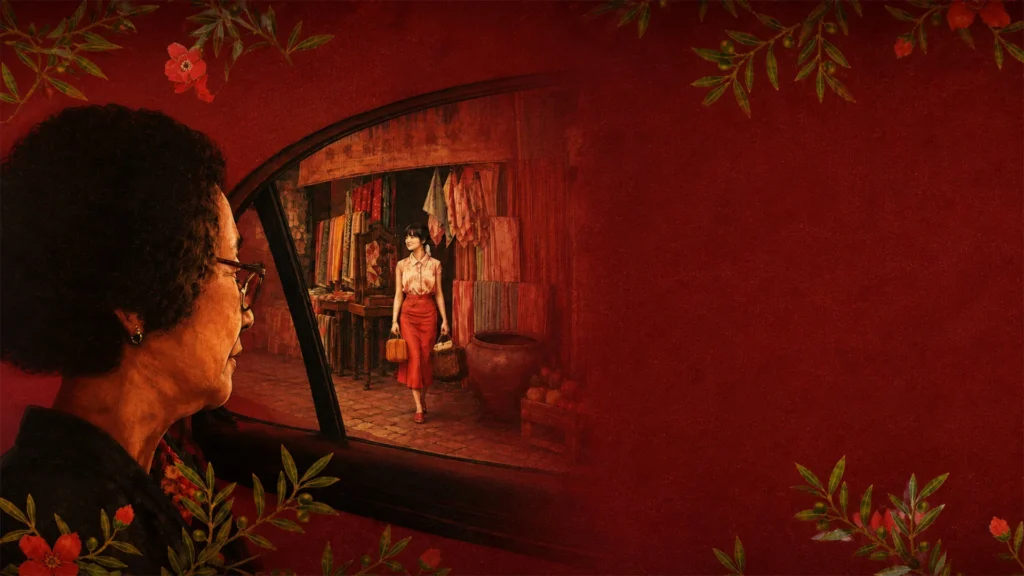

Dear You
- Director: Lan Hongchun
- Starring: Li Sitong, Wang Yantong, Wu Shaoqing, Zheng Runqi, Wang Xiaohui, Zhao Shuguang, Li Deru, Li Shuhao
- Genre: Drama, Family, Comedy
- Runtime: 118 mins
- User Rating: ★ 9.2
Dear You is a modern masterpiece. Director Lan Hongchun creates a world where human emotion is allowed to breathe and thrive. There are moments of sadness, humour, and kindness throughout the film, two qualities that, sadly, feel increasingly lacking in today’s world.
At the centre of the story is Xiaowei (Zheng Runqi), a young man who owes money and is desperate to find a way to pay his debts. He discovers qiaopi letters, letters and remittances sent by overseas Chinese to their families back home in China—and becomes convinced that his long-lost grandfather, Zheng Musheng (Wang Yantong), might be able to help him.
There is just one problem: Musheng lives in Thailand.
Hoping to find his supposed “billionaire grandfather,” Xiaowei schemes with a relative to travel to Thailand in search of him. But once he arrives, he discovers something he never expected. The man who has been corresponding with his grandmother for years is different than they expected.
I’m not going to reveal where the story goes from there, because part of the beauty of Dear You is allowing its mysteries to unfold naturally.
Written by Lan Hongchun, Zheng Xuanxuan, Zhu Liyun, and Yang Leng, the film becomes much more than a story about a young man looking for money. It is a beautifully constructed love story about endurance, separation, sacrifice, sadness, kindness, and, ultimately, the core of what makes us human.
The story moves between the present and the past, using flashbacks to reveal the lives of Zheng Musheng and his wife, Ye Shurou, as they live on opposite sides of the world. Musheng is in Thailand, while Shurou remains in China. Their connection is maintained through the qiaopi letters, with Musheng sending money home to help his family.
But why did he leave the people he loved?
In 1948, as the Chinese Civil War intensified, the KMT was aggressively conscripting young men. Zheng Musheng, a poor villager from the Chaoshan region, feared being drafted. To protect himself and his family, he made the painful decision to leave China and seek work overseas.
Dear You does an incredible job of turning this history into something deeply personal. Rather than simply telling us what happened, the film allows us to experience what life might have felt like for these people. It becomes a kind of time capsule, transporting us into the lives of two people separated by distance, circumstance, and time.
The production design is particularly impressive. China and Thailand are given distinct identities, and their different environments help reinforce the emotional distance between the characters. Yet despite being separated by thousands of kilometres, Musheng and Shurou remain connected through their letters and the compassion they share.
Dear You is a unique love story, but it isn’t a traditional one. There is also an element of mystery running through the film. I’m not going to reveal what that mystery is, but I will say this: its resolution is incredibly heartwarming. More importantly, it actually revitalized my belief that human beings are, at their core, capable of being good.
That’s something I didn’t expect from this film.
The performances are another major strength. The chemistry between the cast members feels completely effortless. At times, it genuinely feels as though we’re watching two families through a hidden camera rather than watching actors perform scripted scenes.
Wang Yantong, as Zheng Musheng, and Li Sitong, as Xie Nanzhi, share a great deal of screen time, and their relationship feels wonderfully natural. They play off one another in a way that never feels forced.
The humour is especially effective. It isn’t loud or inserted simply to make the audience laugh. It’s subtle and feels like the kind of humour that naturally happens between family members and people who have known each other for years. It feels lived-in rather than scripted.
And that’s really what makes Dear You work so well.
It feels human.
There are only a handful of films that seem to find you at exactly the right moment in your life. Films that somehow reach through the screen and remind you that, no matter how difficult things become, you have to keep going. You have to keep living. You have to remember the people who shaped you, even when they are no longer beside you.
Dear You is one of those films for me.
It reminded me that there are still countless stories waiting to be told, stories about people whose lives, sacrifices, mistakes, kindness, and love deserve to be remembered. It also reminded me that cinema doesn’t always need spectacle to make an impact. Sometimes, all it needs is a good story, honest performances, and a genuine understanding of the human heart.
Dear You is beautiful, heartbreaking, funny, mysterious, and incredibly warm. Most importantly, it left me feeling better than I did before I watched it.
That is something very few films can accomplish.
This is art at its finest.
Opening In Theatres In The United States And Canada September 4, 2026


